
Garden
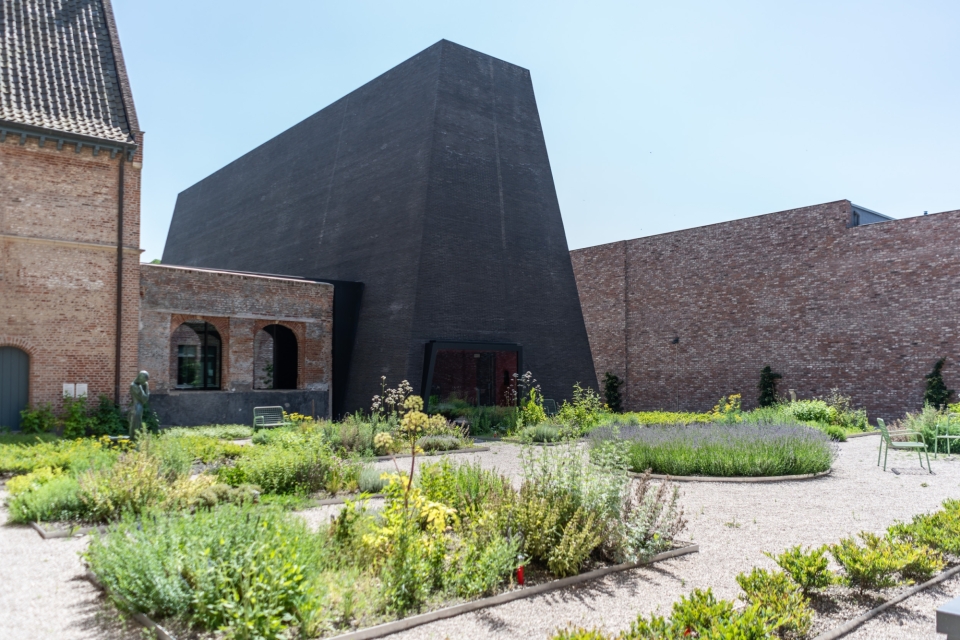
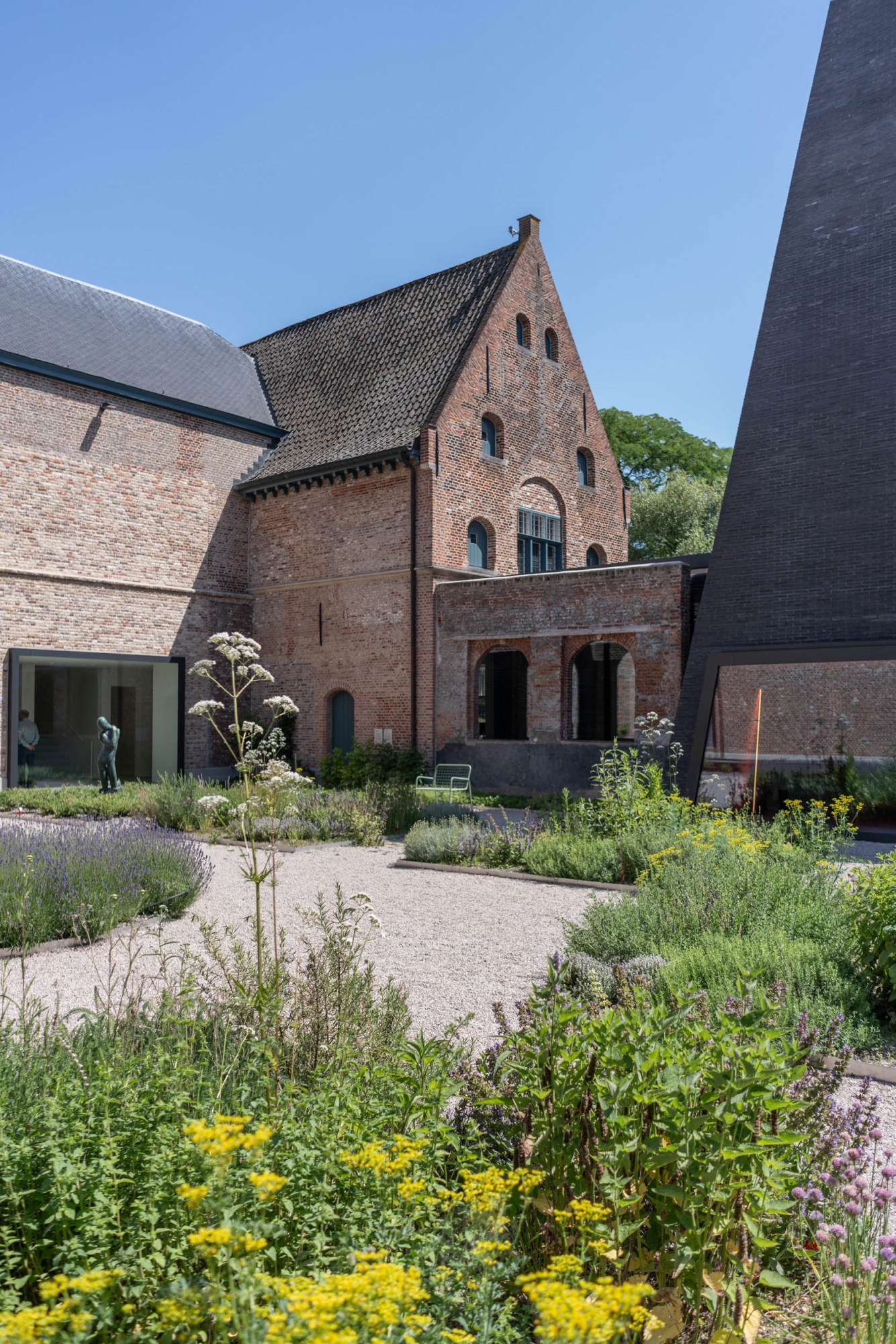
Where the walled kitchen gardens of the Cistercians and the Poor Clares once stood, there is today a public inner garden with edible herbs, flowers and plants. The site still carries traces of its past: within the monastic tradition of the Groeninge Abbey, the kitchen garden was closely tied to the use of plants in food, medicine and ritual.
The garden of Abby continues this tradition and, through art, plants new seeds of beauty, encounter and comfort. Here you can linger after a museum visit, or enjoy a picnic with a delicious 'take-out' dish from Abby Café, among herbs and artistic interventions in the public space, in collaboration with Kunst in de publieke ruimte.
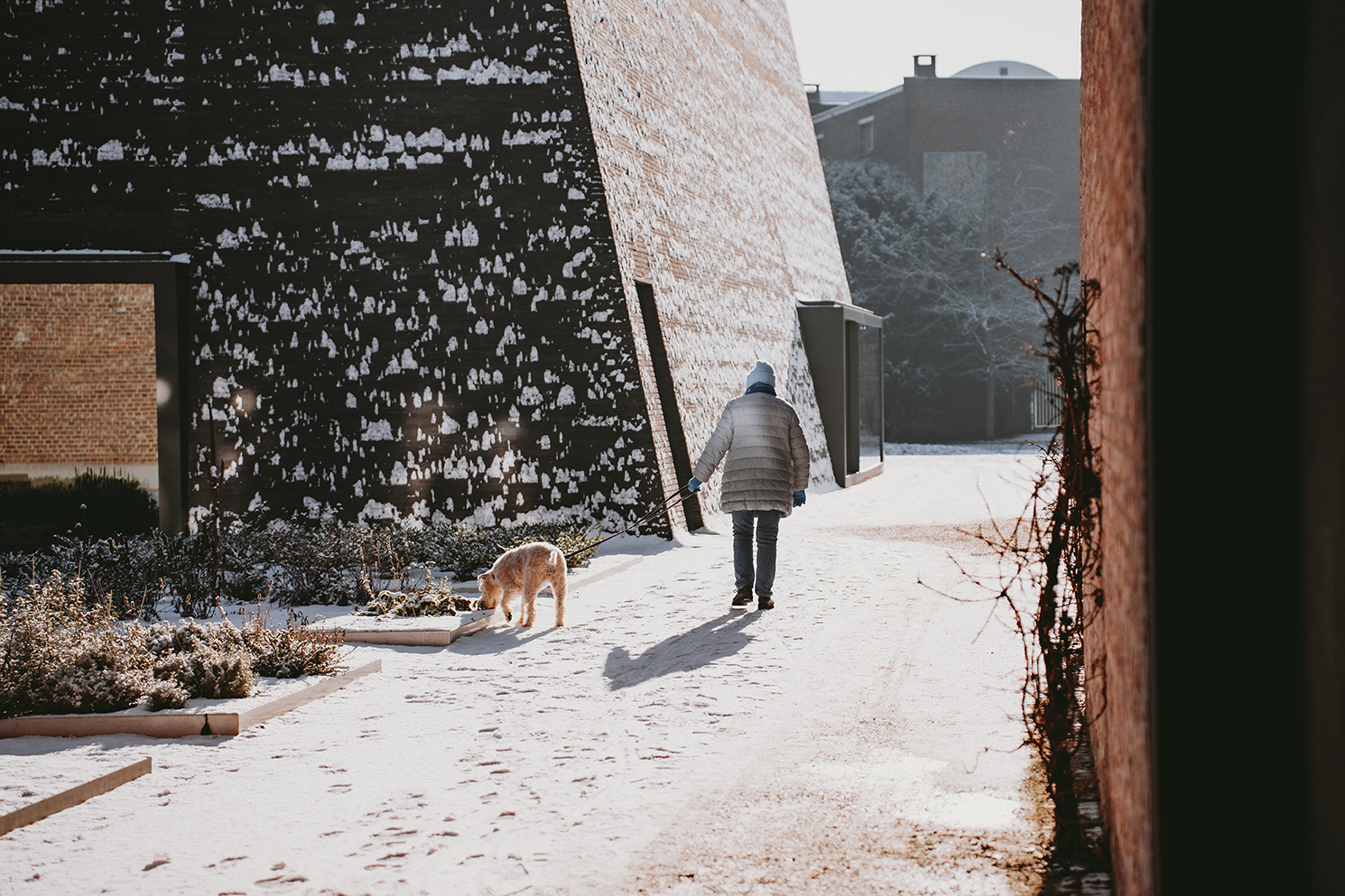
The inner garden of Abby is part of the Begijnhofpark and is freely accessible to everyone.



Art

Wilting Flower #5
Daan Gielis (2022/2025)
This six-metre high blue-green neon flower with a drooping bud dwells in the twilight zone between vitality and vulnerability. The snake’s head fritillary (Fritillaria Meleagris) symbolises rebirth and renewal. At the press of a button, the neon flower lights up for a few minutes. As a poetic variation on the centuries-old ritual of burning candles in the chapel, the artwork symbolises the continuity between solace and beauty seekers past and present.
For this work, Daan Gielis (1988-2023) drew inspiration from a collection of early modern woodcuts from the Plantin-Moretus Museum in Antwerp. The artist grew up around plants – his mother was a florist and his dad a landscape architect – and was gripped by their temporal nature. A flower wilts within days but in this short lifespan it shows tremendous vitality. That combination of temporality and strength is what Gielis expresses in clear neon. He himself was forced to embrace that temporality. From a very young age he was beset by a severe auto-immune disease. While it made him vulnerable and confronted him with his own mortality, it also fuelled his will to live. This experience lies at the heart of Wilting Flowers: dying flowers that still shine and radiate. A depiction of a short life as it comes to a close.

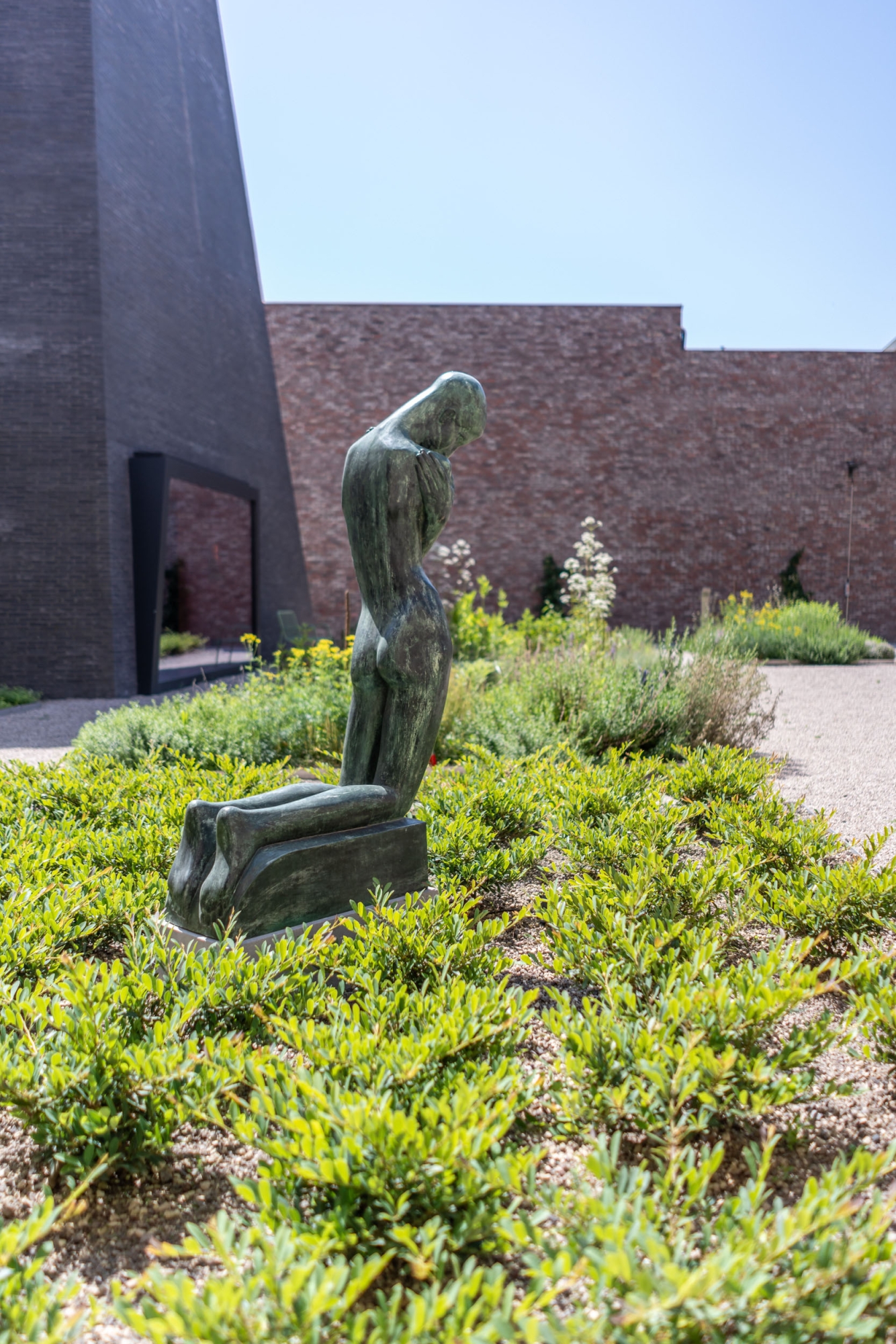
Geknielde jongeling
George Minne (1925)
As from 1889, George Minne (1866-1941) repeatedly explored the theme of the kneeling youth in both drawings and sculptures. This austere, expressive bronze sculpture is one of the many variations of this figure, which is best known from the sculpture group ‘Fountain with Kneeling Youths’ in Ghent.
The work can be interpreted in different ways. The youth by the water is reminiscent of the demi-god Narcissus, who fell in love with his own reflection and whose desire for the unreachable object of his affection destroyed him. As a solitary figure, the self-embracing youth with the bowed head evokes introspection and humility, lending the statue a mystical and almost religious character.
In addition, Minne’s Youths and their naked, fragile vulnerability challenge traditional gender roles. The delicate portrayal of these young men, in all their fragility and tenderness, deviates from conventional male statues and offers an alternative vision – and a broader understanding – of masculinity.

Creation
Kris Martin (2024)
Until 1978, when the Poor Clares left Groeninge Abbey, these wall chapels depicted the Seven Sorrows of Mary. Kris Martin resurrects them with Creation, an artwork in glass mosaic that refers to the seven days of creation using an abstract, universal visual language.
The oeuvre of Kris Martin (°1972) is suffused with religious symbolism and in that sense has a strong link with the many convents and chapels in his native Kortrijk. His work raises questions about identity, meaning and mortality – topics that have been present in art history for many centuries. He plays with recognition and alienation to make us ponder the bigger questions. In this way he creates room for reflection, contemplation, resistance and poetry.
Groundskeepers
Abby’s gardeners help maintain the inner garden, the front garden and the terrace. They tend to the flowerbeds, water during dry periods and remove waste and dead plants. They ensure that the paths, benches and terrace area are kept tidy and check that the outdoor artworks remain in good condition, allowing visitors to fully enjoy the beauty surrounding Abby.

Also have green fingers? Do you know a few things about (edible) flowers, plants and herbs and how to tend to them with love and care? Do you like to spend time outdoors and work in the garden, ebb and flow with the seasons while reflecting on how you can add colour and beauty to your living environment? And do you like to chat with visitors now and then and offer a word of explanation?